
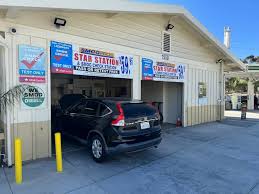
I recently met a couple who moved from Arizona to a beautiful spot in North Park. They had a clean 2019 SUV and assumed that because it was “50-state legal” when they bought it, the California registration would be a simple paperwork swap. Two weeks later, they were stuck in a loop of DMV appointments and failed inspections.
As of 2026, California’s oversight of vehicles entering the state has reached its highest level of scrutiny. If you’re moving to San Diego or buying a car from across state lines, you aren’t just getting a smog check; you are performing an “Initial California Registration.” The rules for this are significantly stricter than a standard biennial renewal.
The “7,500 Mile” Rule: Don’t Get Caught with a New Car
The biggest trap for newcomers is the mileage on their odometer. California law is very protective of its local car dealerships and its air quality. If you bring a vehicle into the state with fewer than 7,500 miles on it, the DMV considers it “new.”
If that “new” car is not specifically 50-state emissions certified (meaning it only meets Federal EPA standards), you literally cannot register it here. I’ve seen people forced to sell their cars back across the border because they tried to move here with a brand-new vehicle that didn’t have the California-specific emissions sticker under the hood.
New vs. Used Out-of-State Registration
| Category | Mileage | Requirement |
| New Out-of-State | Under 7,500 | Must be “50-State” or “California” certified. |
| Used Out-of-State | Over 7,500 | Can be “Federal” (49-state) but must pass CA smog. |
| Exemptions | Any | Inherited vehicles or divorce settlements. |
Before you pack the moving truck, pop your hood. Look for a label that says “This vehicle conforms to California regulations.” If it only mentions “Federal” or “EPA,” and you have 6,000 miles on the dash, you have a problem.
The 2026 Diesel “Heavy Duty” Shakeup
If you’re moving to San Diego with a heavy-duty diesel truck (think a Ford F-350 or a RAM 3500 used for towing), the landscape changed dramatically in early 2026. While the EPA recently blocked some of California’s attempts to regulate out-of-state trucks passing through, those rules do apply the moment you register that truck in San Diego.
For diesel vehicles manufactured in 1998 or newer, the smog check is mandatory. However, in 2026, the state is looking closer at “Delete Kits.” I’ve talked to many owners who “deleted” their Diesel Particulate Filter (DPF) while living in states with lax rules. In San Diego, that is an immediate “Tamper” failure. The cost to put those systems back on can easily exceed $5,000.
Diesel Smog Checklist
| Component | Status | Impact on Test |
| DPF (Particulate Filter) | Must be present and original. | Instant Visual Fail if missing. |
| EGR System | No block-off plates allowed. | Instant Visual Fail. |
| DEF (AdBlue) Tank | Must be functional/no bypass. | Functional Fail. |
| Smoke Opacity | Must be under 5% (for newer). | Tailpipe Fail. |
If you have a diesel, look for a smog check location that specifically mentions “Heavy Duty Diesel” on their sign. These technicians have the specialized tools to test the high-pressure systems on modern Cummins, Powerstroke, and Duramax engines.
Why “Federal” Cars Often Fail in San Diego
You’ll hear people say, “Federal cars are legal in California as long as they are used.” This is true, but there’s a catch. A Federal-spec car (49-state) has a slightly different “allowance” for emissions than a California-spec car.
When you go to a smog check discount station in San Diego, the computer identifies your car by its VIN. If it’s a Federal car, the tailpipe standards are slightly more lenient, but the visual inspection is just as tough. If your Federal car’s catalytic converter died and you replaced it with a cheap “Universal” converter in Texas, you will fail in San Diego. California requires CARB-approved converters, which have a specific EO (Executive Order) number stamped on them.
The 20-Day Countdown: Don’t Be Late
The California DMV gives you exactly 20 days to register your vehicle once you establish residency or start a job here. I know that sounds like a lot of time, but between finding a new home and unpacking, it flies by.
If you miss that window, the penalties start stacking up. And here is the kicker: you can’t complete the registration without a passing smog certificate. If your car fails, you are in a race against time to get it fixed, passed, and registered before the DMV adds late fees that can triple the cost of your tags.
Step-by-Step Out-of-State Process
- The Pre-Check: Ensure no “Check Engine” light is on.
- The Smog: Visit a smog check station before you go to the DMV.
- The VIN Verification: Most smog stations can’t do this; you usually need a DMV employee or a licensed verifier to physically check the VIN on the dash and door frame.
- The DMV Appointment: Bring your smog certificate, your out-of-state title, and proof of California insurance.
The “Military Exemption” Confusion
San Diego is a huge military town, and I see this mistake constantly at stations near Miramar and 32nd Street. Many service members believe that because they are on active duty, they are exempt from California smog.
The truth is a bit more nuanced. If you keep your vehicle registered in your “Home of Record” state, you don’t need a California smog check. But the moment you want California plates, the military status doesn’t matter—you must pass the same test as everyone else. I’ve helped several young sailors navigate this; if you’re keeping your Florida or Texas plates, just make sure your registration there is up to date. If you’re switching to CA, head to a station and ask for a smog check discount for military members—many shops in San Diego are happy to help our service members save $10 or $20.
Final Thoughts for the San Diego Newcomer
Moving to San Diego should be about the beaches and the tacos, not about fighting with the Bureau of Automotive Repair. The most important thing you can do is verify your emissions label before you move.
If your car is in good shape and hasn’t been modified with “49-state” parts, the process is usually smooth. Just remember that the 2026 standards for software and “permanent codes” apply to everyone. Take your car for a long drive on the I-8 to get everything hot, find a reputable shop, and get that certificate in your hand before you ever step foot in a DMV line. It will save you hours of frustration and let you get back to enjoying your new life in the sun.

