
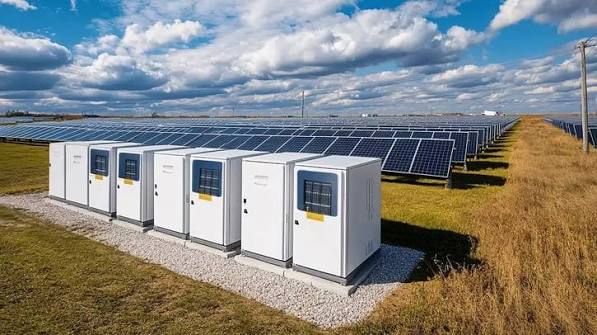
Solar panels have quietly become a normal purchase. Batteries are where the argument still lives.
Half the industry says storage is the obvious next step. The other half says you are paying $15,000 to solve a problem your utility already solves for free. Both camps have a point, and which one is right depends almost entirely on your province, your rate plan, and how much a dark house bothers you.
This article runs the arithmetic honestly, including the parts that make batteries look bad.
A Battery Solves One of Three Different Problems
Most confusion comes from people arguing about batteries without agreeing on what the battery is for. There are three distinct jobs, and they have completely different economics.
Backup power keeps your fridge, furnace, sump pump, and lights running when the grid goes down. This has real value that never appears on a hydro bill.
Rate arbitrage charges the battery when electricity is cheap and discharges it when electricity is expensive. This is pure dollars-and-cents and can be calculated precisely.
Self-consumption stores your midday solar surplus so you use it yourself in the evening instead of exporting it. This only matters where the utility pays you poorly for exports.
A homeowner buying for backup and being sold on payback will be disappointed. One buying for arbitrage in a province with flat rates is throwing money away. Sort out which job you are hiring the battery for before anything else.
Net Metering Is the Competitor, and In Much of Canada It Is Winning
Here is the thing that undermines the battery pitch in most Canadian provinces.
Under standard net metering, your meter runs backward when you export. A kilowatt-hour you push to the grid at noon offsets a kilowatt-hour you pull back at 8 p.m., one for one. The grid acts as a free battery with unlimited capacity and no degradation.
You cannot beat free.
Where that arrangement holds, a battery adds almost nothing financially. It only earns its keep on backup and on time-of-use spread. Where net metering is weak or export credits are paid below retail, the calculation flips fast.
| Export arrangement | How exports are credited | Effect on battery economics |
| Full retail net metering, annual carryover | 1:1 against consumption | Battery adds little financial value |
| Full retail net metering, monthly reset | 1:1 but surplus expires | Modest value, avoids losing surplus |
| Net billing at wholesale rate | Well below retail | Battery value rises sharply |
| Time-differentiated credits | Export credited at time-of-export price | Storage can shift value meaningfully |
| Capped system size or export limits | Excess curtailed | Battery captures otherwise wasted output |
Programs change. Several provinces have revised their terms in recent years, generally in a less generous direction. Confirm the current rules with your utility before you build a spreadsheet on last year’s numbers.
What Storage Actually Costs Per Usable Kilowatt-Hour
This is the section that decides the question, so it gets the room it deserves.
Battery marketing quotes headline capacity and headline price. Neither is the number that matters. The number that matters is what one kilowatt-hour of stored, delivered energy costs you across the life of the unit.
Nameplate capacity is not usable capacity
A battery advertised at 16 kWh does not give you 16 kWh. Two deductions apply.
Depth of discharge is the share of capacity the management system will let you use. Modern lithium iron phosphate units allow 90% to 100%. Older chemistries allowed far less.
Reserve for backup is capacity you deliberately hold back so there is something in the tank if the grid drops. Set a 20% reserve and you have removed 20% from daily arbitrage duty.
Round-trip efficiency takes another bite
Energy goes in as AC, converts to DC, sits in cells, converts back to AC. Each step loses a little. Good residential systems land at 86% to 92% round trip.
Put 10 kWh in, get roughly 9 kWh out. That 10% is a permanent tax on every cycle, and it must be paid at the price you bought the energy for.
Degradation shrinks the asset every year
Lithium batteries lose capacity with cycles and with time. Typical warranties promise 70% of original capacity after 10 years or a set throughput, whichever comes first.
So the battery that gives you 13.5 kWh in year one gives you around 10 kWh in year ten. Averaging across the life is more honest than using the year-one number.
The lifetime cost calculation, done properly
Here is a full worked example using round numbers you can substitute your own values into.
| Input | Value used |
| Installed cost including inverter and transfer switch | $15,000 |
| Nameplate capacity | 15 kWh |
| Usable at 90% depth of discharge | 13.5 kWh |
| Average usable across 10 years after degradation | About 11.7 kWh |
| Round-trip efficiency | 90% |
| Delivered per cycle, lifetime average | About 10.5 kWh |
| Cycles per year, realistic daily use | 330 |
| Warranty life | 10 years |
| Total delivered energy over 10 years | About 34,650 kWh |
| Lifetime cost per delivered kWh | About $0.43 |
Read that last line carefully. Every kilowatt-hour that passes through the battery carries roughly 43 cents of hardware cost before you count the electricity itself.
For arbitrage to pay, the price spread between your cheap hours and your expensive hours has to exceed that. In most Canadian rate structures, it does not come close.
Where the spread is actually large enough
There is one meaningful exception, and it is growing: ultra-low overnight rate plans.
Ontario’s ultra-low overnight option, for example, prices overnight power very cheaply and weekday evening power very expensively. Comparable structures are appearing elsewhere as utilities try to shift EV charging off the evening peak.
| Rate structure example | Cheap price | Expensive price | Spread | Beats $0.43 hardware cost? |
| Flat rate | Same all day | Same all day | $0.00 | No |
| Standard tiered | About $0.10 | About $0.12 | $0.02 | No |
| Conventional time-of-use | About $0.09 | About $0.18 | $0.09 | No |
| Ultra-low overnight plan | About $0.03 | About $0.29 | $0.26 | Not on hardware cost alone |
| Ultra-low overnight, battery cost at $8,000 | About $0.03 | About $0.29 | $0.26 | Marginal, close to break-even |
Even the best rate spread in the country struggles against current installed costs, unless prices come down or an incentive covers a large share.
That is the honest answer on arbitrage. It is not there yet for most people, and anyone telling you the battery pays for itself on rate shifting alone should be asked to show the cost-per-delivered-kWh math.
What arbitrage earns in a good year
If you are on an ultra-low overnight plan and cycle 10.5 kWh a day at a 26 cent spread, the gross saving is about $2.73 a day, or roughly $900 a year.
Against a $15,000 install, that is a 16-year simple payback on a unit warrantied for 10. Against an $8,000 install after a strong incentive, it becomes about 9 years, which is genuinely interesting.
The variable that moves this most is not the battery. It is the incentive and the installed price.
Resiliency Does Not Show Up on Your Bill, and It Still Matters
Every calculation above ignores the reason most Canadians actually buy a battery.
Outages are getting longer in many regions. Ice storms, wind events, and wildfire-related shutoffs have all produced multi-day outages in the last several years. Meanwhile houses have become more dependent on electricity, not less. A gas furnace still needs power for its blower and controls. A heat pump needs power for everything.
Put a price on it yourself with three questions:
- What does a failed sump pump cost you? A finished basement flood commonly runs $10,000 to $40,000, and insurance may not cover all of it.
- What does a freezer of food cost you, and how often would that happen?
- Is there a medical device, a home business, or a family member for whom losing heat for 48 hours is not merely inconvenient?
If the answer to the third question is yes, stop optimizing payback. You are buying insurance, and insurance is not supposed to have a positive return.
Partial backup beats whole-home backup for almost everybody
Whole-home backup means sizing the battery and inverter to carry your entire panel, including the range, dryer, and central air. That gets expensive quickly and is rarely necessary.
Partial backup uses a subpanel wired to the circuits that genuinely matter: fridge, furnace or heat pump controls, sump pump, a few lights, internet, and one or two outlets. A single battery can carry that load for one to three days depending on the weather.
The subpanel approach typically cuts battery and inverter requirements in half. Spend the savings on a second battery only if the load study says you need it.
| Backup approach | Typical battery size | Typical installed cost | Runtime on critical loads |
| Critical loads subpanel | 10 to 15 kWh | $12,000 to $19,000 | 1 to 3 days |
| Critical loads plus heat pump | 20 to 30 kWh | $22,000 to $34,000 | 1 to 2 days in winter |
| Whole home, no load management | 40 kWh and up | $40,000 and up | Depends heavily on habits |
| Portable generator, critical loads | Not applicable | $1,200 to $3,500 | As long as fuel lasts |
| Standby natural gas generator | Not applicable | $8,000 to $16,000 | Indefinite while gas flows |
Battery Versus Generator, Without the Marketing
| Factor | Home battery | Standby generator |
| Upfront cost | Higher | Lower for equivalent backup hours |
| Runs during a long outage | Limited by capacity and sun | Runs as long as fuel supply holds |
| Noise | Silent | Loud, often restricted by bylaws |
| Maintenance | Essentially none | Annual service, oil, load testing |
| Switchover speed | Milliseconds, nothing blinks | 10 to 30 seconds |
| Emissions | None at the house | Combustion, and carbon monoxide risk |
| Earns money when the grid is up | Possibly, via rate shifting | Never |
| Works with solar | Yes, recharges daily | No |
| Lifespan | 10 to 15 years | 20 years or more with service |
A generator is the cheaper answer to pure outage insurance. A battery is the better answer if you also want daily value, silence, and integration with solar. Some homeowners with critical loads and frequent long outages end up with both.
The Case Where It Clearly Works Today
Batteries make solid financial and practical sense when several of these are true at once:
- Your utility pays below retail for exported solar, or caps what you can export
- You are on a rate plan with a very large overnight-to-evening spread
- Your area sees outages longer than 12 hours more than once a year
- You have a sump pump protecting a finished basement
- A meaningful rebate or low-interest loan covers a large share of the install
- You are adding solar anyway, so shared inverter and labour costs drop
- You heat with a heat pump and have no non-electric backup heat
The Case Where It Clearly Does Not
- You have full retail net metering with annual carryover and a stable grid
- Your rate plan is flat or tiered with a small spread
- Your outages are short and rare
- You are buying purely on a payback promise from a salesperson
- Your roof cannot fit enough solar to recharge the battery in winter anyway
One Detail Installers Skip
Ask whether the system can actually run in island mode during an outage, because a surprising number of grid-tied solar setups shut down entirely when the grid drops and leave you dark on a sunny day.
Sizing Without Overbuying
Two numbers drive the size. Your critical load in watts, and how many hours you want to cover.
Add up the running wattage of everything on the backup subpanel. A fridge averages 100 to 200 W over a day. A gas furnace blower runs 300 to 600 W. A sump pump draws 800 to 1,200 W but only in bursts. Lights and internet add another 100 W or so.
A typical critical load averages 300 to 600 W continuously. Over 24 hours that is 7 to 14 kWh. One well-chosen battery covers a day, and solar can extend it indefinitely if the sun cooperates.
Winter complicates this. A December day in most of Canada produces a fraction of June output, and snow on panels produces nothing at all. Size for the outage you expect in January, not the one in July.
The Verdict
Batteries are not yet a straightforward money-saver for most Canadian homeowners, and any pitch built purely on payback deserves hard questions about cost per delivered kilowatt-hour.
They are a strong buy for a narrower group: homes with weak export credits, homes on ultra-low overnight rate plans, homes with expensive things to protect during outages, and homes where an incentive brings the installed price down near $8,000 for a usable 13 to 15 kWh.
The costs are falling steadily and the rate structures are moving toward larger spreads. Both trends favour storage over time. If your situation does not clear the bar today, the sensible move is to install solar with a storage-ready inverter and leave the wall space and conduit for a battery later. That costs a few hundred dollars now and keeps the door open for whatever the numbers look like in five years.
Run your own version of the cost-per-delivered-kilowatt-hour calculation above using a real quote and your actual rate plan. If the answer is close, resiliency probably tips it. If the answer is not close, the grid is still the cheapest battery you will ever use.

